The Hamburger Has a Backstory Now and I Refuse to Read It
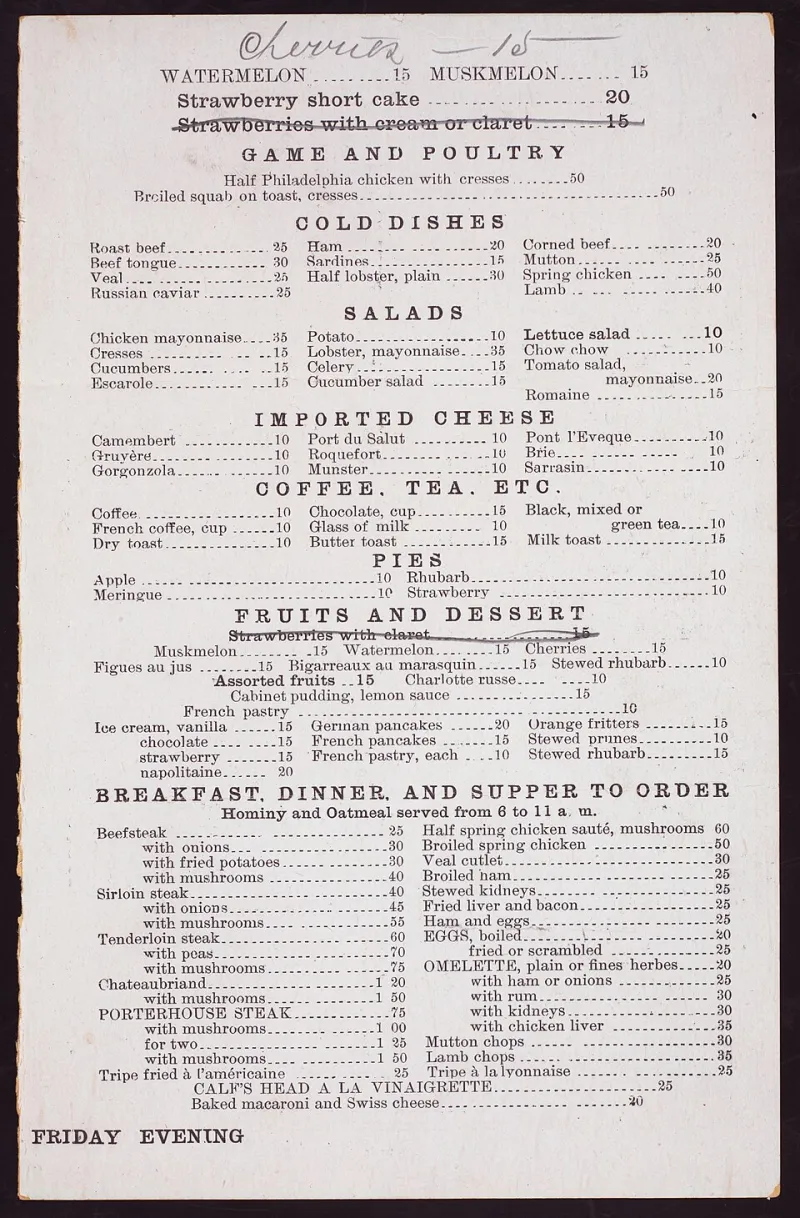
Photo: Scan by NYPL, Public domain, via Wikimedia Commons
I recently opened a menu at a perfectly nice restaurant in a perfectly normal American city, and I learned that the chef's grandmother once took a train from Cincinnati to Louisville, and that her journey is now, somehow, on a brioche bun.
That's it. That's the description of the hamburger. Twenty-three dollars. No mention of toppings beyond 'finished with charred allium jam,' which I'm fairly confident is onions that got a little too confident.
I didn't order the hamburger. I ordered the fries and a Diet Coke and I sat there thinking about how I've never once finished reading a menu and thought, 'Wow, what a narrative arc.'
When Did Food Start Having a Plot?
Look, I appreciate a good origin story. I've seen the movies. But somewhere along the line, restaurants decided that 'hamburger' wasn't evocative enough, and we all just let it happen. Nobody stopped it. Congress did nothing.
Now every menu reads like it was workshopped at an artists' retreat. The chicken isn't chicken — it's 'half-chicken, brined 24 hours, kissed by smoke, resting on a bed of things you'll pretend to recognize.' Resting. The chicken is resting. Sir, it's dead. It has completed its journey. Let it lie.
And the prices! Every dish with a paragraph of backstory costs at least $28, and I promise you the paragraph is where the markup lives. You're not paying for the food. You're paying for the creative writing.
Robert's Official Buzzword Glossary
Since restaurants won't stop, the least I can do is translate. Cut this out. Keep it in your wallet. You'll need it.
- 'Elevated' — Costs $14 more than the version you actually wanted.
- 'Deconstructed' — We ran out of time and gave you the ingredients in separate piles. Assemble it yourself. This is now a feature.
- 'Finished with' — Something got drizzled on it at the last second, and you will be told about it.
- 'House-made' — Made in the building. Could be a Michelin-level achievement. Could be a guy named Greg. No further details available.
- 'Local' — From within 100 miles, and we will mention the specific farm by name, and the farm has a logo of a smiling goat.
- 'Comfort food, reimagined' — Mac and cheese, $26, comes in a small cast-iron skillet that is heavier than the meal.
- 'A study in contrast' — There are two sauces and one of them is spicy.
- 'Chef's journey' — You're paying for his therapy.
All I Wanted Was the Fries
Here's my radical proposal: menus should just say what the food is. 'Burger. Cheese, lettuce, tomato, bun. $16.' Done. Beautiful. I can order in eight seconds and get back to my conversation, which — unlike the grandmother's train ride — is actually happening in the present moment.
Instead, I'll be at the table for six minutes, silently reading about 'foraged garnishes' and 'a nod to the chef's time in Copenhagen,' while my Diet Coke gets warm and my date checks if I've been kidnapped.
At $23 a sandwich, the sandwich should introduce itself plainly and apologize for nothing. It's a sandwich. It knows what it is. Why doesn't the menu?
Robert is bothered. Hungry, too, but mostly bothered.