I Scanned My Own Groceries Like an Unpaid Employee and Got Accused of Shoplifting Anyway
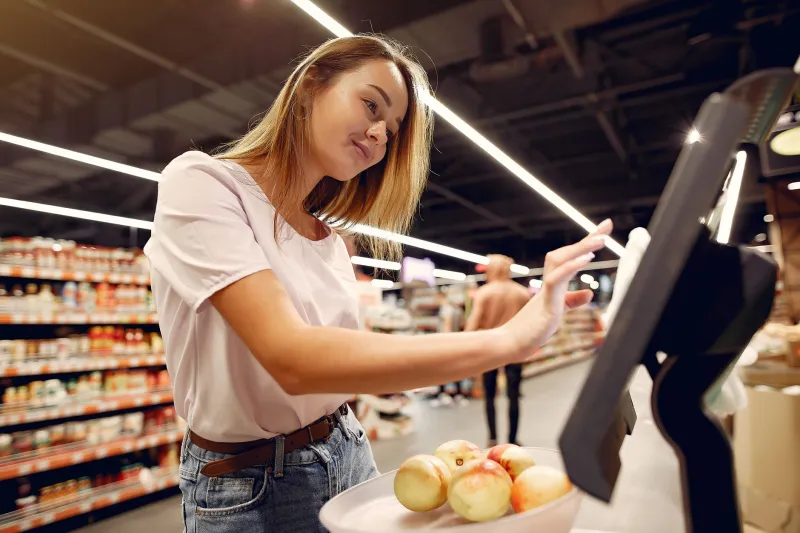
Let me set the scene for you. It's a Tuesday evening. I am tired. I have exactly seven items: a box of pasta, a jar of marinara sauce, a sad little bundle of spinach, two cans of chickpeas, a bar of dark chocolate that I absolutely deserve, and a bag of bananas. Seven items. I picked the self-checkout lane specifically because I am a person who reads social situations and I could see that the staffed registers had lines stretching back to the dairy section.
I am trying to be efficient. I am trying to be a functioning adult. I am trying to get home before 7 p.m. so I can eat dinner like a human being and not a raccoon hovering over a pot at midnight.
What I was not trying to do was commit a felony.
And yet.
"Unexpected Item in the Bagging Area"
I scanned the pasta. Fine. No problem. I placed it gently — gently, I want to stress — into the bagging area. The machine paused. Considered. Apparently decided that was acceptable. We moved on.
I scanned the marinara. Placed it down. The machine made a noise that I can only describe as suspicious. Like it was narrowing its eyes at me. A little light flickered. Nothing happened. We continued.
Then I got to the bananas.
Now, bananas are already a self-checkout trap and everyone knows it. You have to look up the PLU code, which requires you to either remember a four-digit number you learned three years ago or scroll through a produce directory that is organized in a way that suggests the designer has never actually seen a grocery store. I found bananas. I entered the weight. I hit confirm.
The machine froze.
A red light turned on.
The screen read, in a tone that somehow felt accusatory even through LCD pixels: "Please wait for attendant assistance."
I had done nothing wrong. I had weighed my bananas correctly. I had followed every step. And still, this refrigerator-sized snitch decided that I needed to be supervised.
The Attendant Who Has Seen Too Much
The attendant — a teenager who looked like he had already processed more existential dread by age seventeen than most people accumulate in a lifetime — wandered over, swiped a card, pressed two buttons, and walked away without making eye contact. The whole interaction took nine seconds. Whatever I had allegedly done wrong was apparently so minor that it required a human override but not an actual explanation.
Which is somehow worse. At least tell me what I did. Was it the bananas? Was it the way I placed the marinara? Did I breathe wrong? I am standing here in the fluorescent purgatory of a big-box grocery store, being treated like a person of interest, and I cannot even get the courtesy of knowing my crime.
The Psychology of Being Accused by a Machine
Here is the part that really gets under my skin: I felt guilty. I, a grown adult who paid for every single item, who did not attempt to hide a single thing, who did not even bring a reusable bag because I knew the machine would get weird about it — I felt like I had done something wrong.
That is impressive, honestly. It takes real psychological power to make an innocent person feel like a criminal using nothing but a glitchy scale and a passive-aggressive voice prompt. Most humans can't even pull that off. This machine has mastered it.
The self-checkout experience is essentially a masterclass in manufactured guilt. Every pause, every flicker, every "unexpected item" alert is designed — whether intentionally or through sheer mechanical incompetence — to make you feel like you're getting away with something even when you're getting away with absolutely nothing. You start second-guessing yourself. Did I scan that? I definitely scanned that. Wait, did the machine register it? Should I scan it again? If I scan it again will it charge me twice? If it charges me twice is that my fault or the machine's fault and will anyone believe me?
This is not convenience. This is a psychological experiment and I did not consent to participate.
The Audacity of the Business Model
Let's also just briefly acknowledge what is actually happening here from a business perspective, because I think it deserves to be said out loud more often.
The grocery store has eliminated a cashier position. They have replaced that cashier with me. I am now doing the labor. I am scanning, bagging, and processing my own transaction. I am, functionally, an unpaid employee of this establishment for the duration of my visit.
And in exchange for performing this free labor, I get to be accused of theft.
If I showed up to an actual job and my employer treated me with this level of suspicion on my first day, I would walk out. I would not pass go. I would not collect two hundred dollars. I would simply leave and write a very detailed Glassdoor review. But here, at the self-checkout, I keep coming back. Every week. Because the alternative is standing in a line that hasn't moved since the previous administration.
A Brief List of Items That Have Gotten Me Flagged
For the record, and because I have apparently been keeping track in the back of my brain like a trauma journal, here are some of the items that have triggered a self-checkout intervention during my lifetime:
- Bananas (multiple incidents, see above)
- A single avocado
- A greeting card, because apparently the barcode was "unreadable" even though I scanned it four times in four different orientations
- A bottle of wine, which I understand requires an age check but I am clearly not seventeen and the attendant still had to come over and squint at my ID like she was authenticating a historical document
- A head of lettuce
- Literally just a head of lettuce
What I Have Learned
I have learned nothing, because I will be back at the self-checkout next week doing this exact same dance. I will scan my items with the careful deliberateness of a bomb disposal technician. I will place them in the bagging area with the gentleness of someone handling antique crystal. I will hold my breath every time the machine pauses.
And at some point, inevitably, a light will turn red. An attendant will materialize. Nine seconds will pass. And I will feel, once again, like a suspect who has been let off with a warning.
The machine will not apologize. The machine never apologizes. It will simply reset and ask me, in its cheerful synthetic voice, if I'd like to start a new transaction.
Yes. Fine. Let's do this again. I'll grab a basket.